
Digital Identity and Web3 Applications are about your online self. Your name, actions, and login details tell systems who you are. This keeps your accounts, banking, and online services safe.
It serves as a key to unlock online interaction and is built from a variety of digital footprints, such as social media profiles, login credentials, and behavioral patterns.
A profile or collection of data associated with a particular user, computer, or other entity inside an IT ecosystem is known as a digital identity. For activity tracking, fraud detection, cyberattack protection, and access control, digital IDs help computer systems differentiate between users.
The foundation of online communications, digital identity initiates service access, guarantees transaction security, and enables customized experiences. It allows users to access internet services such as social media, online shopping, and e-banking.
This article covers the types, examples, and importance of online identity systems and their impact on user privacy. In today’s digital age, the idea of trust is changing — a person’s identity is now frequently more virtual than real.
Digital Identity and Web3 Application:

Digital identification systems now face both potential and challenges due to growing cybercrime, increased digitization, and stricter laws. Digital Identity and Web3 face big security risks. In 2022, identity theft happened every 22 seconds. Government IDs and online services were the biggest targets.
Finding a balance between security, interoperability, and user ease has become crucial as digital identities become increasingly ingrained in daily life.
The Three Foundations of Digital Identity
Federated Identity, Electronic IDs, and Digital ID Wallets are the three main ways that digital identity systems are developing. Each provides special skills suited to particular requirements. Federated Identity Users can authenticate across multiple sites without creating separate accounts thanks to services like Google and Facebook.
Although this method is convenient, it raises privacy and data centralization concerns, and its reliance on siloed networks limits its appeal across borders. Electronic IDs Often distributed as physical cards with integrated chips, these IDs facilitate digital signatures and both online and offline authentication.
Although reliable for domestic use, their patented designs pose scaling issues, particularly in global settings. Although useful for non-digital purposes, government-issued identification documents cannot meet the needs of the modern digital world.
Digital wallets for identification Digital wallets, the most adaptable of the three, allow users to manage what they share and with whom by storing a variety of credentials, including certificates, licenses, and diplomas.
Wallets, which are already used for ticketing, loyalty programs, and payments, are increasingly used for identity verification. According to surveys, 60% of Europeans believe governments are the most trustworthy source for digital wallets, with banks second at 30%.
Conventional Digital Identity Models’ limitations
Conventional digital identity solutions , which are usually centralized or federated, have serious drawbacks, such as serious security flaws (single points of failure), a lack of user control over personal data, and inadequate platform interoperability.
Conventional digital identity models have a significant drawback, traditional systems store huge amounts of sensitive personal information in centralized databases controlled by governments or businesses.
Hackers find these centralized databases appealing, and a single data breach can expose millions of users’ information, leading to fraud and identity theft.
Users frequently have little control over the collection, storage, and sharing of their personal data with outside parties. Regular use of data for purposes like targeted advertising without express, informed consent raises significant privacy concerns.
What is Web3 A Brief Synopsis
Digital Identity Web3 the next evolution of the internet users will have more control over their data, identity, and digital assets as it moves away from centralized platforms like Facebook and Google and toward a decentralized, user-owned web built on blockchain.
Peer-to-peer interactions, smart contracts, and decentralized applications (dApps) without middlemen are enabled by this digital identity in the Web3 internet, which promotes trust through open networks and code rather than large businesses.
Read-Only (Web1), Read-Write (Web2), and Read-Write-Own (Web3) Web1 Static, primarily read only material (Yahoo, early websites).
Web2 is social and interactive, but it is dominated by large businesses, such as Google and Facebook, that own user data. Web3 is Blockchain-powered, decentralized, and user-owned, returning power to the people.Digital identity and Web3 application.
Decentralized Identity
Instead of relying on central authorities like governments or corporations, decentralized identity (DeID) is a user-centric digital identity system in which people manage their data and store encrypted credentials in a secure digital wallet.
It improves privacy and security by enabling users to selectively submit verifiable evidence (such as I’m over 18) without disclosing underlying sensitive data, using technologies like Decentralized Identifiers (DIDs) and Verifiable Credentials (VCs) on distributed ledgers (such as blockchain).
An Explanation Of Self-Sovereign Identity
A self-sovereign identity is a digital identity that a person controls in a decentralized way, without having their data stored by third parties. Instead, the person is in charge of their data.
It is the digital equivalent of someone verifying their identity by pulling their actual ID card out of their wallet and then replacing it thereafter.
Self sovereign identification (SSI) is centered on data security and privacy, as well as on making it simple for people to verify their credentials. The person who owns those verifiable credentials is responsible for them.
Read Also: Cloud computing services
The Foundation Of Digital Identification Is Blockchain.
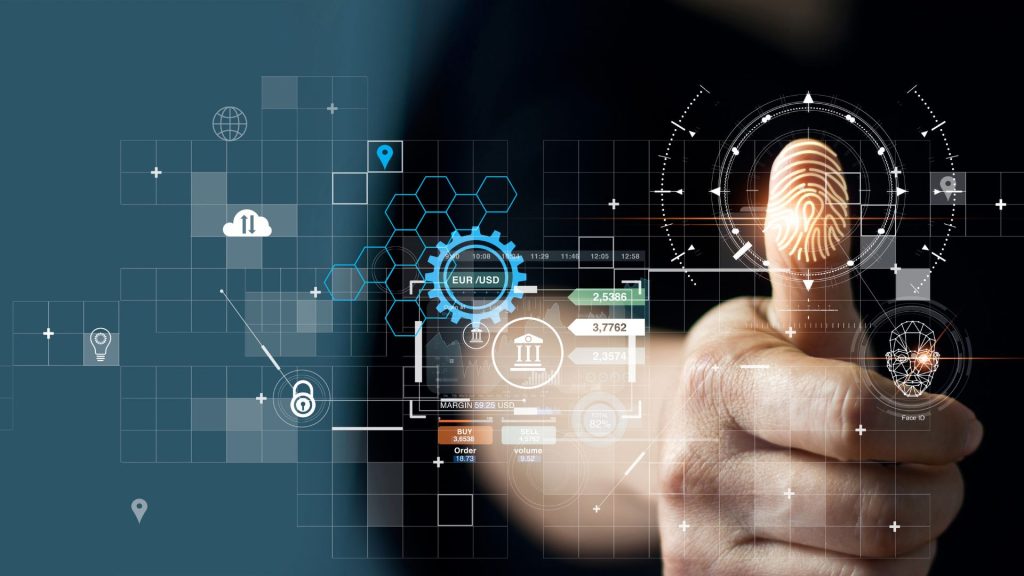
Blockchain applications are specifically designed for cryptocurrencies. Digital identity and Web3 application. The core of cryptocurrencies is blockchain technology, which gives them their decentralized, safe, and transparent characteristics.
By replacing fragmented, central databases with a decentralized, secure, and user-controlled system (Self-Sovereign Identity, or SSI), blockchain serves as the foundation for digital identity in Web3.
It allows people to own and manage their data with verifiable credentials, ensures privacy through selective disclosure (e.g., proving age without disclosing a birthdate), and builds trust through immutable, tamper proof records.
These are Essential Aspects of the Web3 Identification System.
- Cryptocurrency
- Artificial Intelligence
- Customization and Perceptive Searches
- Technological Development 3.0
- Control of Personal Data: Ubiquity and Connectivity
- Decentralization
- 3D and Spatially Aware User Experience
- Redefining Ownership of Data
User Control, Privacy and Security
Allowing people to manage their data with options like sharing only what’s needed, strong security methods (like biometrics, multi-factor authentication, encryption, and blockchain), and systems for giving permission to access their information is essential for privacy, security, and user control in digital identity.
This moves away from centralized, vulnerable databases and gives users the ability to manage their online profiles and prevent misuse, though risks like phishing and data breaches still present difficulties.
What is Digital Identity Management
A virtual depiction of a person in the digital realm is called a digital identity. It consists of the characteristics and data that set them apart on the internet. Digital identities include things like email addresses, biometric information, login passwords, and decentralized identifiers (DIDs).
Digital identities are essential for controlling access to network resources in the field of cybersecurity. A distinct digital identity must be obtained before any person, device, or program can access a network resource.
This digital identity contains the authorization and permissions needed to interact with the resource Digital identity in Web3. To access resources in an AWS environment, for instance, a user would need an AWS account.
This account serves as their online identity on AWS and may provide them with access to various cloud computing services and resources, such as Lambda functions and EC2 instances (virtual servers in Amazon’s Elastic Compute Cloud).
In a similar vein, an application on an EC2 instance needs first to obtain a digital identity before it can access data from an S3 bucket.
EB3 Identification In Online Services And Commerce
By transferring authority over personal information and authentication from centralized organizations to the individual user, Web3 identity is revolutionizing online services and e-commerce.
This new paradigm uses blockchain technology to offer a more private, secure, and user-focused digital experience by utilizing verifiable credentials (VCs) and decentralized identities.
It is impossible to overlook the hype surrounding Web3 e-commerce. Through the introduction of decentralization, transparency, improved user control, and AI integration, the development of the World Wide Web promises to transform corporate practices.
Challenges and Solutions for Web3 Development
Web3 is changing the way we communicate online, but there are special challenges in developing decentralized apps (dApps). These are the top 8 problems that developers encounter, along with solutions.
High fees, delays, and congestion plague networks like Ethereum.Digital identity and Web3 application. To increase transaction capacity, use sidechains, sharding, or Layer 2 solutions (like zk-Rollups).
Attacks and vulnerabilities in smart contracts, such as phishing or reentrancy, are frequent. Secure key management, multi-signature wallets, and routine audits can all be beneficial.
Blockchains frequently operate independently. Use tools such as Cosmos or Polkadot to improve interoperability. Users are deterred by complicated wallet setups and interfaces. Provide uniform interfaces, incorporate user education, and streamline onboarding.
Digital Identity’s Future In The Web3 Era
In Web3, digital identities will be managed through digital wallets that store verifiable credentials (such as degrees, IDs, and reputations) on decentralized blockchains, providing increased security, privacy, and fine-grained control over data sharing.
This represents a move away from centralized control and toward user-owned, self sovereign identities. In order to enable seamless, portable identity across platforms, users will verify by connecting their wallets, selectively proving attributes (such as age and qualifications) without disclosing all personal information, minimizing the need for usernames and passwords, and expediting KYC AML procedures.
Conclusion: Digital Identity and Web3 Application
A paradigm shift toward user empowerment is the conclusion regarding digital identification in Web3 apps.
Web3 promises improved security, privacy, and seamless platform interoperability by shifting digital identity control from businesses to individuals through the use of blockchain, decentralized identifiers and verifiable credentials.
According to the conclusion, digital identification in Web3 apps signifies a radical departure from the weaknesses and data exploitation of conventional centralized systems and a move toward user-centric control, security, and privacy.
This new approach is based on blockchain technology and significant advancements that give people control over their personal data. Digital identity and Web3 application.